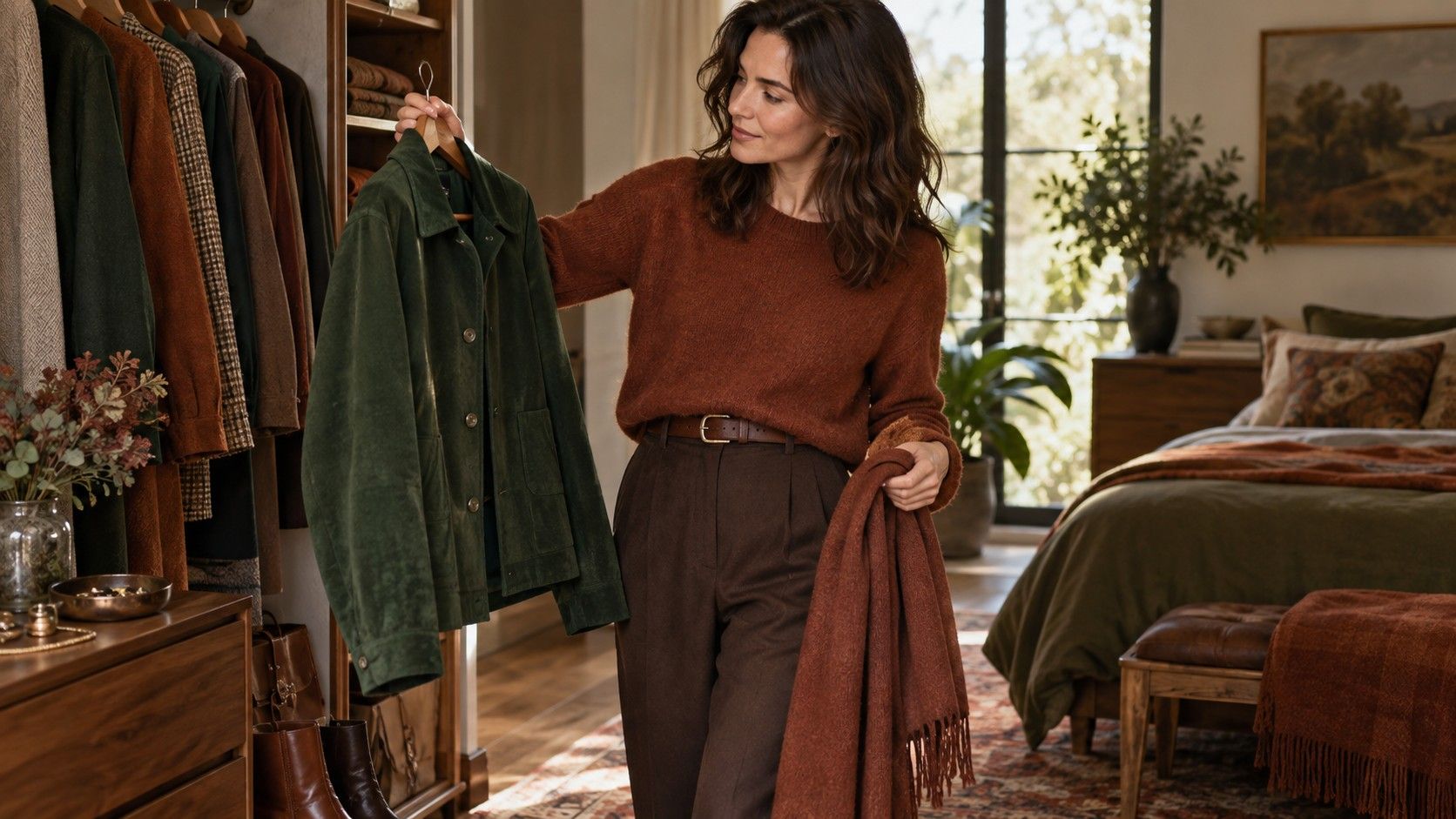
Deep Autumn clothes work best when they look substantial, warm, and a little shadowed: think espresso wool, deep olive cotton, dark teal silk, and rust that has more earth than orange. The trap is treating the palette like a box of autumn decorations. A good Deep Autumn outfit should still feel ordinary enough for a train platform, an office, or dinner with friends; the color does the work quietly.
Start with depth before chasing the perfect shade
The most useful test for deep autumn color palette clothing is not whether a garment is called autumnal on a product page. Put it beside black and then beside cream in daylight. If it has enough visual weight to hold its own near black, but carries a warm or softened cast near cream, it is often worth trying. Dark moss, aubergine with a brown undertone, tobacco, ink teal, oxblood, and bitter-chocolate brown tend to pass this test.
Depth matters because a pale warm item can make the rest of a Deep Autumn look seem disconnected. A light camel T-shirt may be perfectly pleasant, yet it often needs a dark jacket, belt, or trouser to anchor it. This is why a wardrobe built only from beige can feel washed out even when every piece is technically warm. Keep the lighter colors as supporting pieces, not as the entire visual field.
Choose dark warm neutrals that can replace black
Black is not forbidden, but head-to-toe black can look sharper and colder than the colors around it. Espresso is usually the easiest replacement: it works with denim, cream, rust, olive, and gold jewelry without demanding attention. Deep olive behaves almost like a neutral too, especially in trousers, a utility jacket, or a roomy knit. Dark warm navy is harder to find, but a blue that leans teal can be more flattering than a clean inky navy.
When shopping, compare the fabric rather than trusting the label. Brown leather can look too orange under store lighting; a leather piece with a slightly smoky finish is more versatile. Charcoal is useful only when it is softened with brown, olive, or a warm scarf near the face. A cold blue-grey blazer may be excellent tailoring and still make the outfit look as if the wearer borrowed it from another wardrobe.
| Wardrobe role | Reliable Deep Autumn choice | What often causes trouble |
|---|---|---|
| Dark trouser | Espresso, olive, dark warm denim | Blue-black or icy charcoal |
| Everyday knit | Forest green, tobacco, dark teal | Pastel sage or bright cobalt |
| Light layer | Cream, oatmeal, warm stone | Optic white or cool dove grey |
| Accent | Rust, paprika, oxblood, mustard | Neon orange or candy red |
Use rich color as a focal point, not a uniform
A rich shirt or sweater is often enough. Pair a forest-green merino knit with espresso jeans and brown boots; add one small echo, such as a bronze watch face or a patterned scarf with green in it. The result reads intentional because the color is repeated once, not because every item fights for the same seasonal mood. Rust trousers with a rust bag and a rust lip may be technically coordinated, but they can tip into fancy-dress territory very quickly.
The same principle helps with prints. Look for prints with a dark base and a limited palette: botanical greens, muted leopard, paisley containing burgundy and camel, or a checked shirt where cream is the lightest note. If the print has stark white, icy pink, and bright royal blue, no amount of brown footwear will turn it into a natural fit. The easiest place for a bolder print is below the face or under a plain outer layer.
Keep warm colors from becoming heavy
Deep does not have to mean dense. Texture is the simplest way to create air: washed denim against suede, a fine ribbed top under a matte overshirt, or a silk blouse with broad wool trousers. A glossy burgundy satin skirt and a polished oxblood bag can look overly formal together, while the same skirt with a faded olive sweatshirt has a more relaxed balance. Notice sheen as much as hue; very shiny fabric makes a dark color appear louder.
Use one lighter interruption when an outfit feels too enclosed. Cream trainers, a warm ivory tee at the neckline, or an oatmeal sock visible above a boot can lift brown and green without breaking the palette. The light piece should be creamy rather than stark. Pure white creates a high contrast that can be attractive, but it changes the mood from deep and blended to graphic and crisp.
Separate Deep Autumn from Deep Winter in real outfits
The phrase deep winter colour palette clothes appears beside autumn searches for a reason: both seasons can wear dark colors, and both can be drawn to burgundy, navy, and emerald. The difference is temperature and clarity. Deep Winter often looks strong in blue-based jewel tones, bright white, and black. Deep Autumn usually gains more from a greenish teal, brownish burgundy, cream, and metal with an aged-gold finish.
If a color feels almost right, hold a warm brown accessory beside it. A Winter-friendly fuchsia or cobalt will usually clash with the brown; a Deep Autumn-friendly wine or teal becomes more coherent. This is not a scientific diagnosis, only a practical dressing-room shortcut. Skin, contrast, hair color, and personal taste still matter, and nobody needs to throw out a favorite black coat because a seasonal chart disapproves.
Adjust the palette for weather and routine
In cold months, let the darker colors take the larger pieces: an espresso coat over an olive knit, or a deep teal dress with brown tights. In warmer weather, reverse the proportion. Start with cream linen, warm khaki shorts, or an oatmeal shirt, then use rust sandals, a dark green overshirt, or a cognac belt for depth. The palette survives summer when the fabrics get lighter and the dark notes become smaller.
Build a short rail of combinations that you can put on without negotiation: espresso plus cream plus forest green; olive plus tobacco plus brass; dark teal plus camel plus burgundy. Photograph the ones that work in ordinary daylight, not just under flattering bedroom lamps. A Deep Autumn wardrobe becomes easy when its pieces share depth and warmth, leaving room for personal style instead of asking you to dress like a leaf display.