Olive skin has a reputation for being easy to dress, usually followed by a photo of someone in a perfect emerald dress under perfect daylight. Real wardrobes are less cooperative. The same olive complexion can look golden beside one top and faintly grey beside another, so the useful question is not which color is universally flattering, but which degree of warmth, depth, and clarity makes your own skin look awake.
Why olive skin makes standard color advice feel unreliable
Olive is not a single undertone. It often describes a green-grey cast sitting over warm, cool, or neutral skin, and that mix explains why a sweater borrowed from a friend can look excellent in one mirror and oddly yellow in a shop changing room. Indoor LEDs, a warm foundation, and even the pinkness left after a workout can further disguise the base tone. Treat online palettes as starting points rather than verdicts.
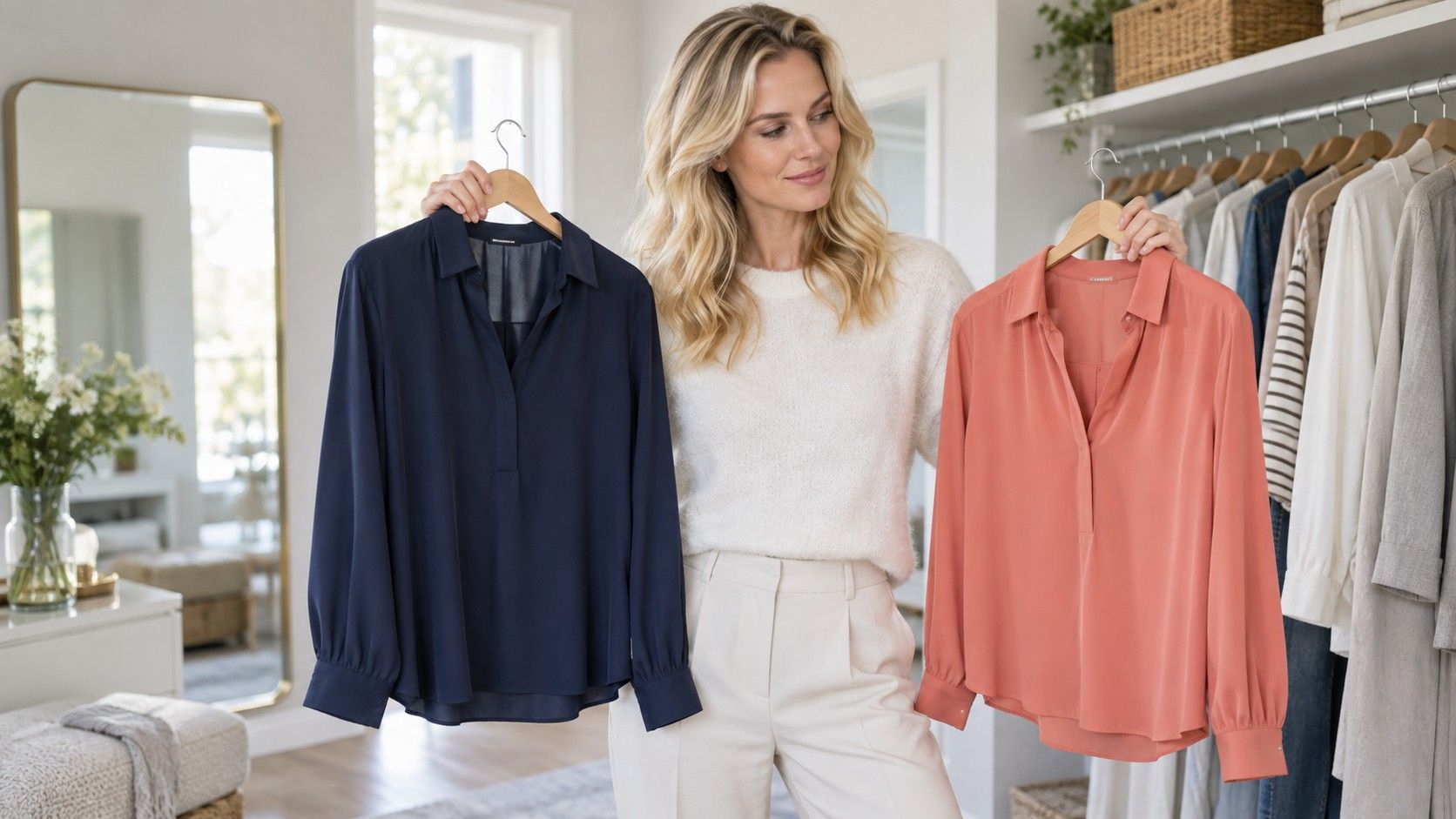
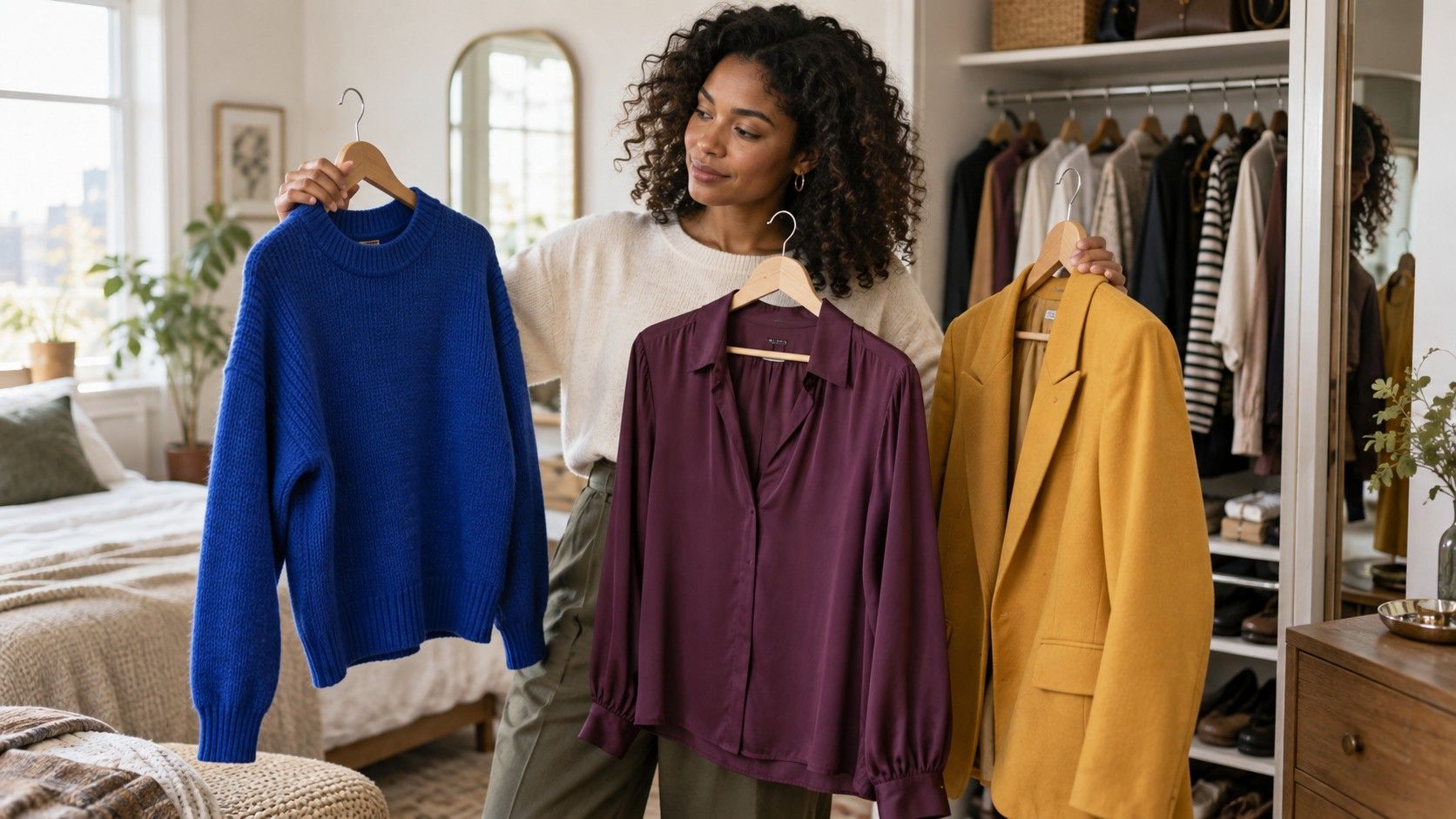
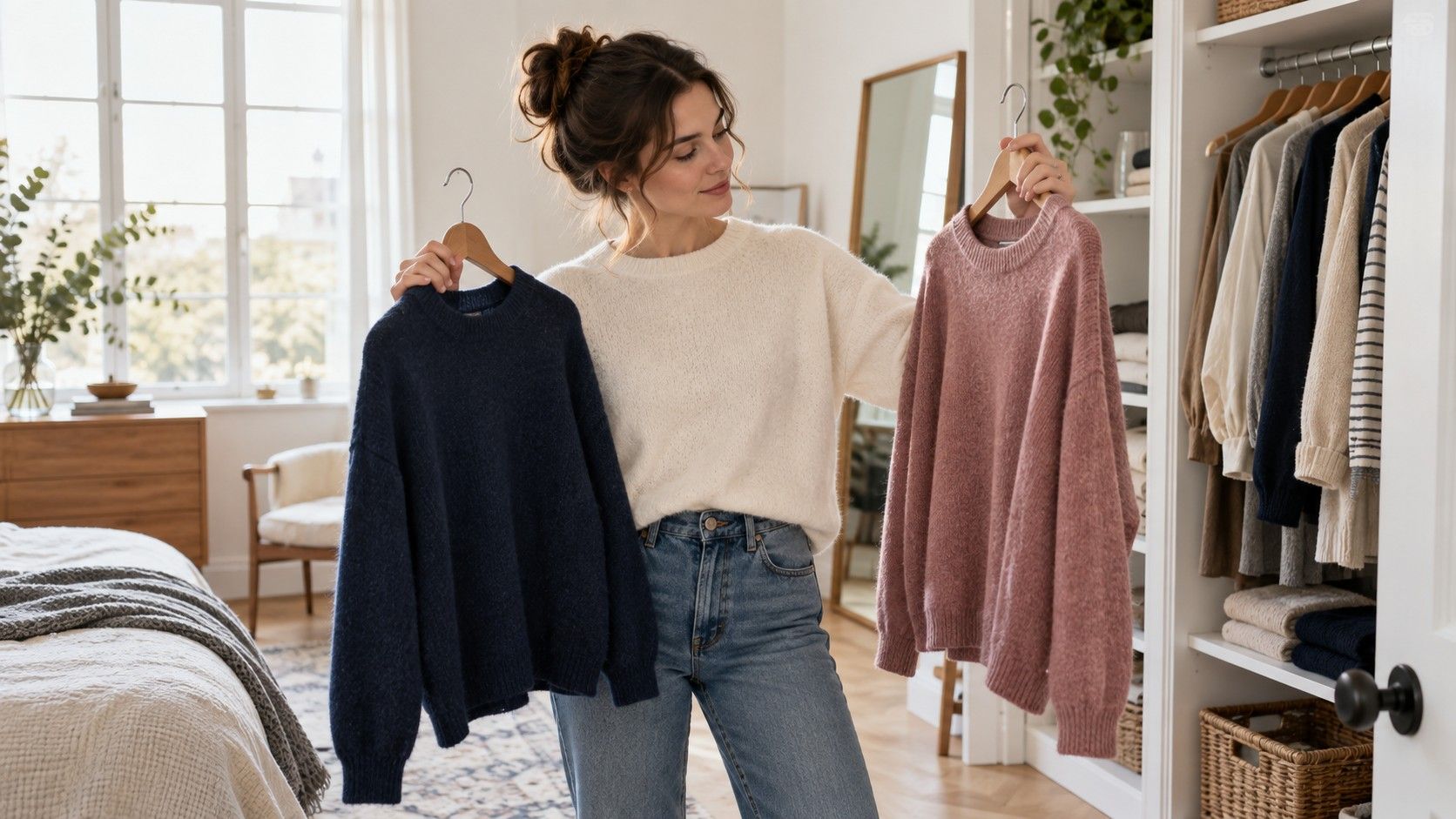
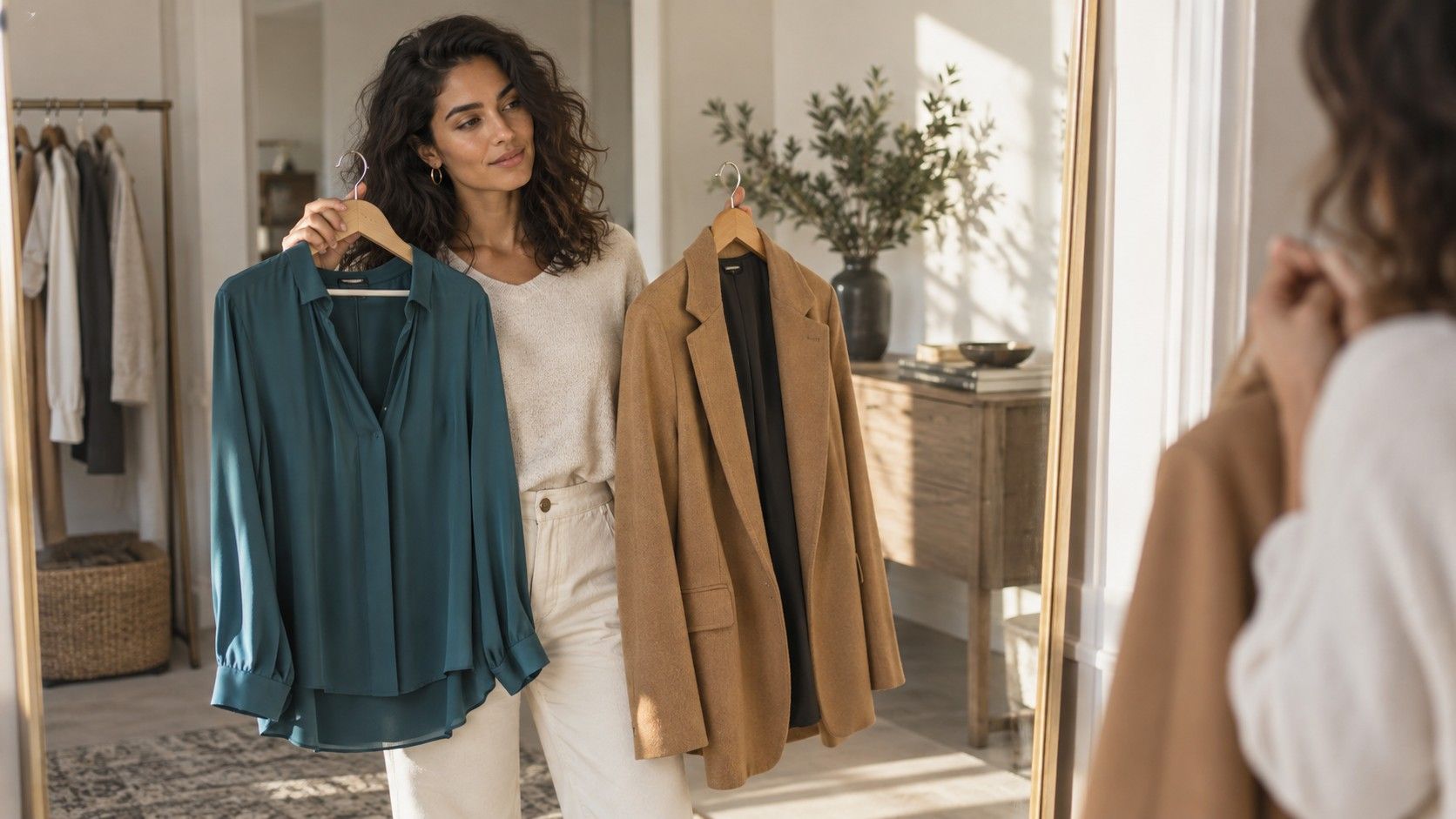
A quick closet check is more useful than holding silver and gold jewelry against your wrist for ten seconds. Pull out three tops you already wear often: one warm neutral, one cool neutral, and one saturated color. Photograph each near a window with no filter. Look at your face rather than the garment. The winner usually makes the under-eye area look calmer and the whites of the eyes clearer; the loser may make skin look flat, greenish, or unexpectedly orange.
Find the warm, cool, or neutral direction within olive skin
Warm olive skin often carries a touch of bronze, yellow, or muted gold. It can handle cinnamon, moss, terracotta, warm navy, and softened cream beautifully, while icy lavender may feel disconnected unless the rest of the outfit adds contrast. Cool olive skin tends to look more grey, blue, or muted green. It often comes alive in ink blue, plum, blue-red, charcoal, and cool forest green, while bright mustard can overpower it.
Neutral olive skin has the widest range, but that does not mean every shade gets a free pass. Strongly yellow beige can still make the face look sallow, and very pale icy pastels can erase natural contrast. When you are unsure, use a middle-depth shade first: petrol blue instead of electric turquoise, berry instead of hot pink, or olive green that is darker or lighter than your skin rather than almost identical to it.
| What you notice | Useful starting shades | Check before buying |
|---|---|---|
| Golden or bronzy olive | camel, brick red, moss, deep teal | Choose cream over stark white |
| Cool or grey olive | navy, plum, cobalt, charcoal | Keep mustard away from the face |
| Balanced olive | petrol, burgundy, forest green, taupe | Match depth to your natural contrast |
Use greens, blues, and reds without blending into the outfit
Green is often recommended for olive skin so casually that it becomes a trap. A yellow olive jacket can merge with the skin and make the whole look feel dusty. The safer choices are contrast greens: deep pine, emerald, bottle green, or a clean jade. If you love a softer sage shirt, add a navy blazer, dark denim, or a berry lip color so the outfit has a deliberate edge rather than one long wash of muted green.
Blue is usually easier. Teal, peacock, cobalt, deep denim, and marine navy create a clean frame around olive skin without demanding much styling. Pale baby blue can work too, particularly on cool olive skin, but it benefits from a darker bottom half. A light blue blouse with faded grey jeans may be pleasant in theory and drained in practice; switch the jeans for dark indigo or add a brown belt and the contrast returns.
Reds should be chosen by their base. Brick, rust, tomato, oxblood, cranberry, and blue-red are all worth testing, but peachy coral may be too close to a warm olive complexion. A simple rule in a changing room: if a red makes redness around the nose or chin more obvious, move either cooler or deeper. The right red makes skin appear more even; it does not need to make it look lighter.
Choose neutrals that keep the face from looking sallow
Black is not forbidden for olive skin, but it can be severe when hair, brows, and eyes are low contrast. A black turtleneck may look sharper with gold earrings, a patterned scarf, or lipstick that supplies color near the face. For everyday use, espresso, charcoal, dark olive, ink, and deep navy often do the same practical work as black while looking less stark in daylight.
Beige requires more patience. Matchy beige is the neutral most likely to make olive skin look tired because many versions contain the same yellow-green cast. Try mushroom, stone, taupe, oatmeal, mushroom grey, or camel instead. Hold the fabric beside your jaw rather than against the back of your hand. If it turns your jawline yellow, wear it as trousers, a skirt, or a coat over a stronger top instead of making it the nearest color to your face.
Build a working palette instead of chasing one perfect color
Most useful wardrobes contain a few repeatable color relationships, not forty supposedly flattering swatches. Start with two dark neutrals, two lighter neutrals, three colors you enjoy wearing, and one accent. For warm olive skin that might be espresso, navy, camel, soft white, teal, brick red, moss, and gold. For cool olive skin, it could be charcoal, ink, dove grey, soft white, plum, cobalt, pine, and silver.
Try each new color in an outfit you already know works. A teal knit is easier to judge with trusted dark jeans than with unfamiliar trousers, shoes, makeup, and lighting all competing for attention. Notice whether you reach for it on an ordinary morning, not just whether it photographs well once. Clothing colors for olive skin tone female readers are often presented as a shopping list, but the better test is repeat wear: a shade earns its place when it makes getting dressed simpler.
Make room for personal taste and changing conditions
Hair color, a tan, glasses, and makeup change how a palette reads. After going lighter with your hair, you may want more contrast near the face. In winter, a favorite pale neutral can look different when your skin is less sun-kissed. None of that invalidates the clothes already in your wardrobe. It simply means a reliable palette should be flexible enough to include a scarf, jacket, or lipstick that adjusts the balance.
Use these clothes color for olive skin tone ideas as a way to edit, not restrict. Keep the shades that make you feel present and comfortable, even if a chart calls them imperfect. The most convincing outfit rarely comes from obeying a seasonal label; it comes from noticing depth, undertone, and the small visual difference between a color that wears you and one that lets your face lead.